

What to Expect During a Sports Physical for School
At Pediatric Care of Four Corners in Davenport, FL, Dr. Eiman ElSayed provides comprehensive sports physicals to ensure your child is healthy and ready to participate in sports. We check for cardiovascular fitness, strength, flexibility, and overall well-being. Our goal is to give you peace of mind that your child is cleared for safe and enjoyable physical activities. For more information, contact us or schedule an appointment online. We are conveniently located at 2516 Sand Mine Rd, Davenport, FL 33897.
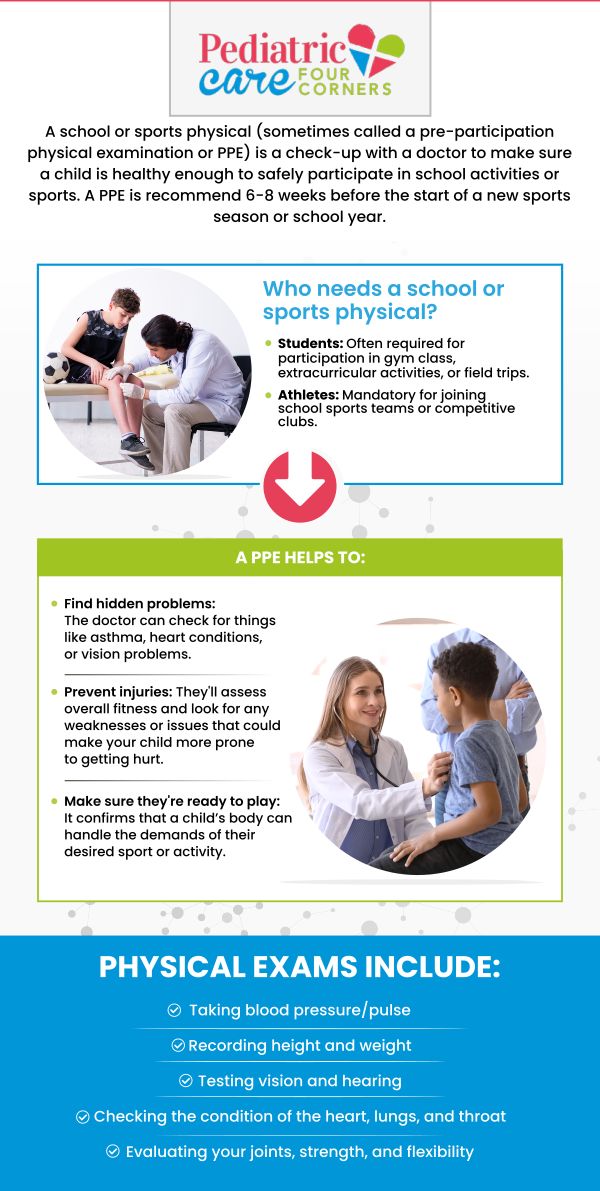
Table of Contents:
What does a sports physical usually include?
How long does a school sports physical take?
Is a heart check part of the sports physical?
Are flexibility and joint checks performed?
Do parents need to be present during the exam?
Why Dr. Eiman ElSayed’s Sports Physicals Ensure Your Child is Ready for School Sports
A sports physical, also known as a pre‑participation physical examination (PPE), is an important health check for young athletes. The purpose of the exam is to ensure that the athlete is physically prepared for sports activities and that there are no underlying medical conditions that could pose a risk during physical activity. At Pediatric Care of Four Corners, our experienced healthcare team provides a comprehensive evaluation during the sports physical, which typically includes several key components:
1. Medical History Review: The provider will ask about the child’s medical history, including any previous injuries, surgeries, and chronic conditions. This is crucial for identifying conditions like asthma, heart problems, or joint issues that could affect performance or safety during sports activities.
2. Vital Signs Check: The healthcare provider will measure blood pressure, heart rate, and temperature to assess your child’s overall health. These vital signs can indicate potential issues that might need further investigation.
3. Physical Examination: The provider will conduct a thorough physical examination, checking the body for signs of conditions that may affect performance. This includes an assessment of the heart, lungs, eyes, and ears, as well as a review of height, weight, and general growth to make sure the child is healthy and developmentally on track for their age.
4. Musculoskeletal Assessment: The provider will evaluate the child’s muscles, joints, and bones for any abnormalities, injuries, or weaknesses. This is especially important for young athletes who might be at risk for overuse injuries, such as sprains, strains, or fractures.
5. Flexibility and Strength Tests: The provider will check the flexibility of muscles and joints, as well as the strength of key areas like the legs, shoulders, and spine. These tests can help identify any muscle imbalances or areas that need improvement to prevent injury during sports.
6. Mental Health and Well-being: Mental health is just as important as physical health when it comes to sports participation. The provider may ask questions about stress levels, sleep patterns, and overall mental well-being to make sure the child is emotionally ready for the demands of athletic competition.
The goal of this thorough evaluation is to ensure the child is fit for sports participation, preventing injuries, and promoting overall health. At Pediatric Care of Four Corners, we take the time to review each aspect of the exam carefully, ensuring your child’s well-being and readiness for physical activity.
The duration of a school sports physical can vary, but typically, the exam takes about 15 to 30 minutes. The exact time depends on the complexity of the child’s medical history, any additional concerns that need to be addressed, and whether further testing or vaccinations are required.
The process is generally streamlined to allow for a thorough yet efficient assessment. The medical history portion of the exam takes about 5-10 minutes, as the provider asks questions about past injuries, medications, and family medical history. This is followed by a physical examination, which usually takes about 10-15 minutes. If additional tests, such as a vision check or vaccinations, are required, the exam may take slightly longer.
At Pediatric Care of Four Corners, we make sure that the sports physical is comprehensive while respecting your time. We understand that parents and children have busy schedules, so we strive to make the process as quick and efficient as possible while still ensuring that all health aspects are addressed thoroughly.
A heart check is an important component of the sports physical. Given the rigorous demands of sports, it’s essential to ensure that the child’s heart is functioning properly and that there are no underlying heart conditions that could increase the risk of complications during physical activity.
During the sports physical, the provider will conduct a heart exam that includes:
● Listening to the heart with a stethoscope to check for any abnormal heart sounds, such as murmurs, irregular rhythms, or extra beats. This is a key part of the exam, as certain heart conditions, such as arrhythmias or congenital heart defects, can sometimes be detected during this process.
● Checking for signs of fatigue or shortness of breath during exercise or after physical activity, which could indicate an underlying heart issue. If the child reports feeling lightheaded, dizzy, or experiencing chest pain during physical activity, this could be a red flag that requires further evaluation.
Heart conditions such as hypertrophic cardiomyopathy (a thickening of the heart muscle) or congenital heart defects can be dangerous for athletes if not properly managed, so the heart exam is crucial for assessing fitness for sports.
At Pediatric Care of Four Corners, our team takes extra care in ensuring that all potential heart health concerns are addressed during the sports physical. If needed, we will refer patients for further evaluation by a cardiologist.
Flexibility and joint checks are key components of the sports physical, as they help identify any areas that could lead to injury or affect the athlete’s performance. The flexibility and joint assessments typically include:
● Range of motion tests for different joints (e.g., shoulders, elbows, knees, and ankles) to assess how well the joints move. Limited range of motion can indicate stiffness, tight muscles, or previous injuries that may affect performance or increase the risk of injury during sports.
● Strength tests for key muscle groups to identify any weaknesses that could lead to imbalances and, potentially, injury. Weakness in specific muscle groups could affect stability and flexibility, increasing the likelihood of sprains, strains, or joint injuries.
● Balance and coordination assessments to determine if the child is at risk of falls or muscle strain during physical activities.
These assessments help to identify potential issues such as muscle tightness, joint instability, or previous injuries, allowing the provider to make recommendations for physical therapy, stretching routines, or targeted exercises to address weaknesses before they lead to injury. At Pediatric Care of Four Corners, we emphasize the importance of maintaining strong and flexible muscles and joints for injury prevention.
It is generally recommended for parents or guardians to be present during the sports physical, especially for younger children. This allows the provider to review medical history, discuss any concerns, and ensure the child’s comfort during the exam. Having a parent present also ensures that all necessary documentation is completed correctly and that any recommendations or follow‑up care are clearly communicated.
While it is not a strict requirement, parental presence allows for better communication and helps address any questions about the child’s health, past injuries, or recommendations for physical activity. At Pediatric Care of Four Corners, we encourage parents to attend the appointment so they can be part of the process and stay informed about their child’s health and readiness for sports.
Dr. Eiman ElSayed at Pediatric Care of Four Corners in Davenport, FL, offers thorough sports physicals that ensure your child is physically ready for sports participation. Dr. ElSayed evaluates your child’s cardiovascular health, flexibility, strength, and overall fitness to determine their readiness. By ensuring that your child is healthy, Dr. ElSayed helps prevent sports injuries and ensures a safe, active school year. For more information, contact us or schedule an appointment online. We are conveniently located at 2516 Sand Mine Rd, Davenport, FL 33897. We proudly serve patients from Davenport FL, Haines City FL, Poinciana FL, Winter Haven FL, and surrounding areas.
Check Out Our 5 Star Reviews





 Send Text
 How May I Help You?